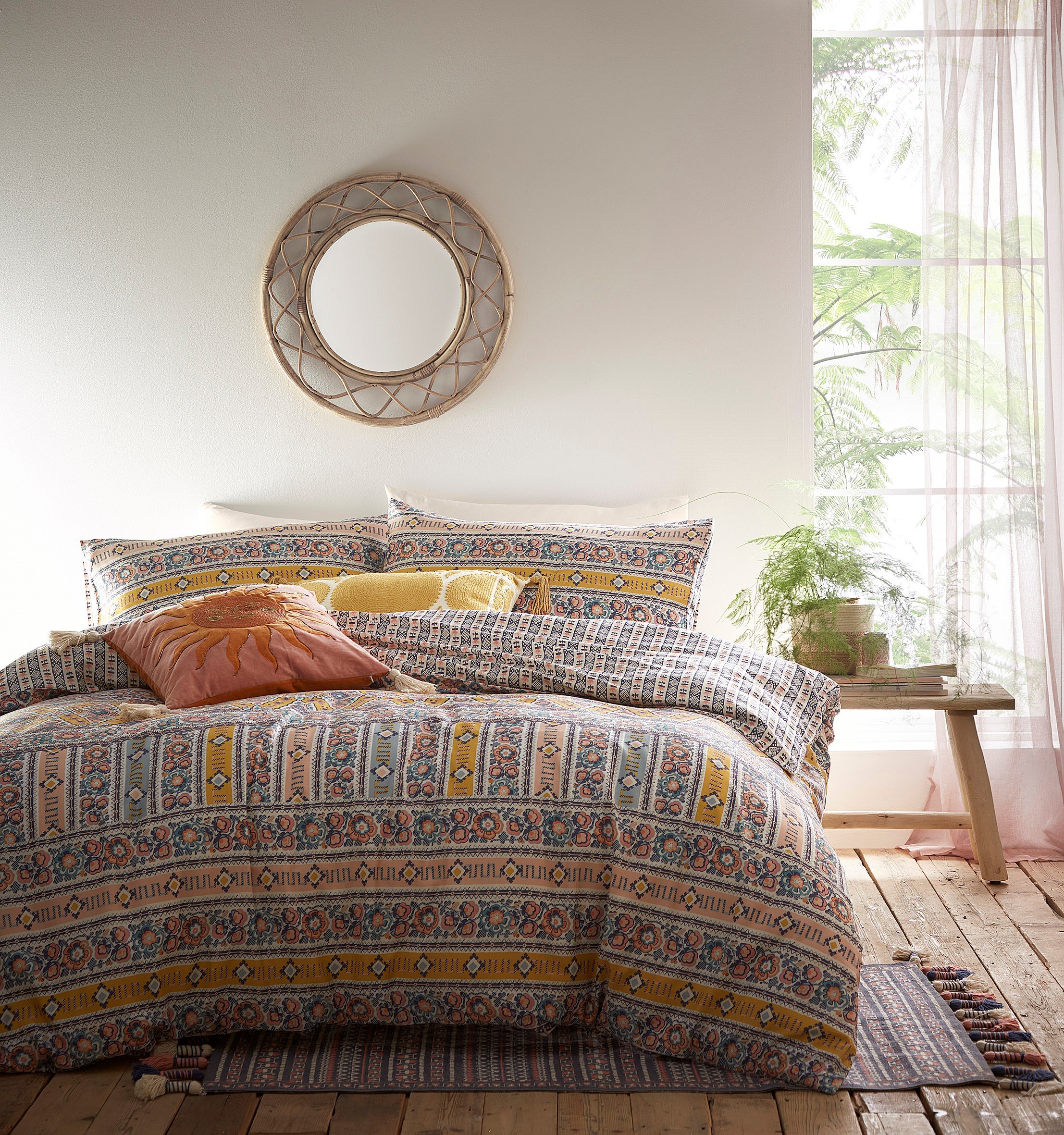
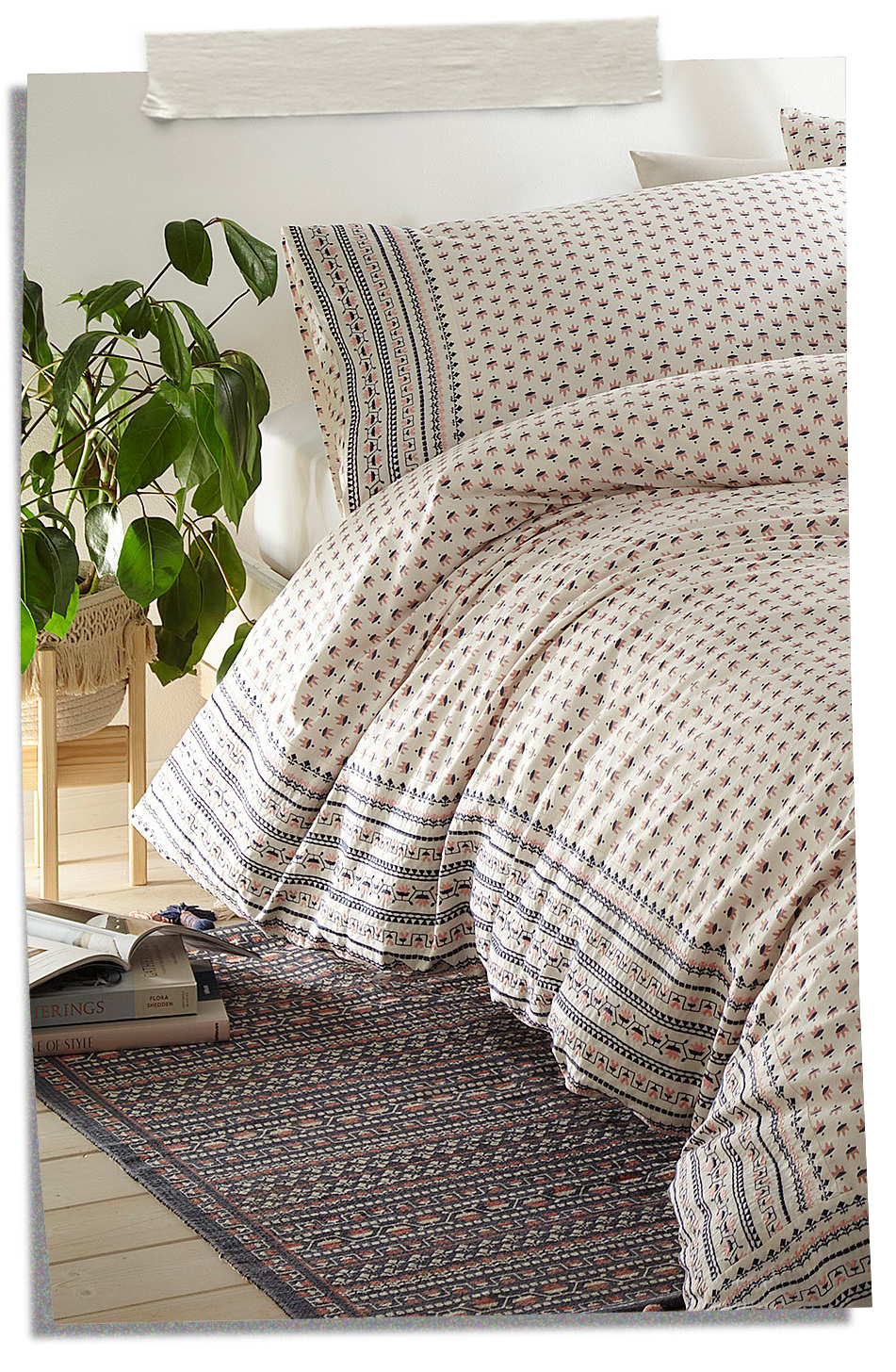
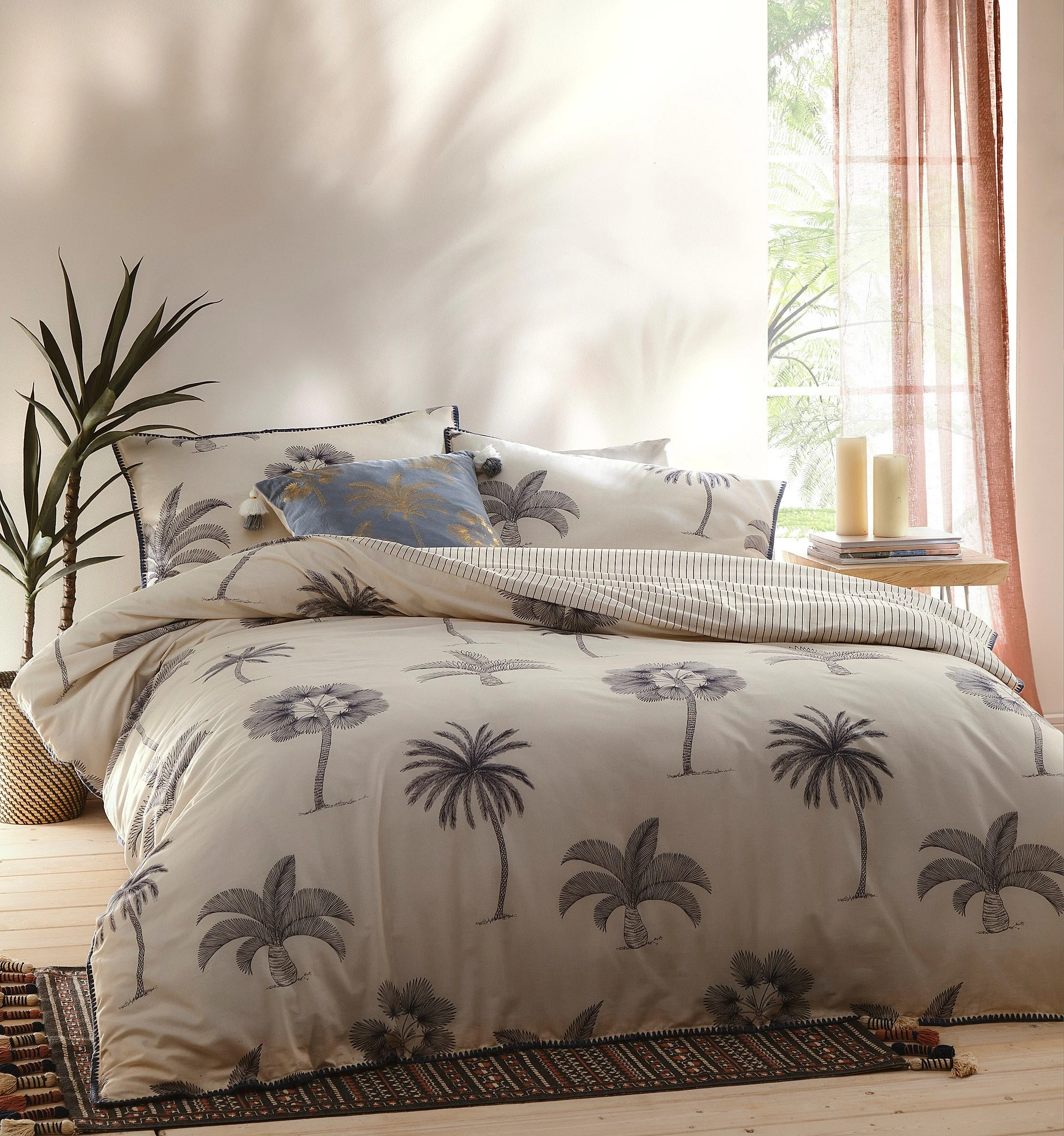
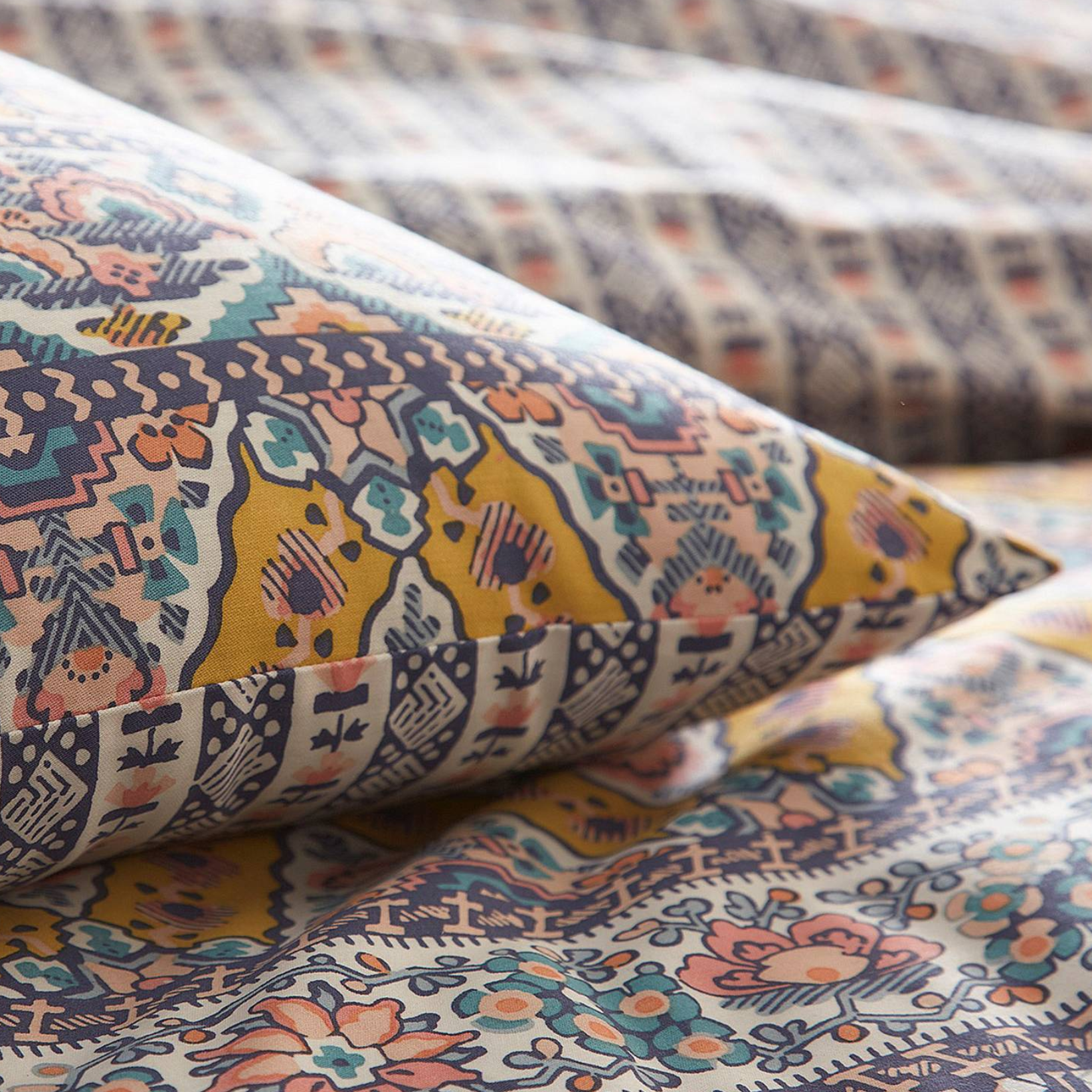
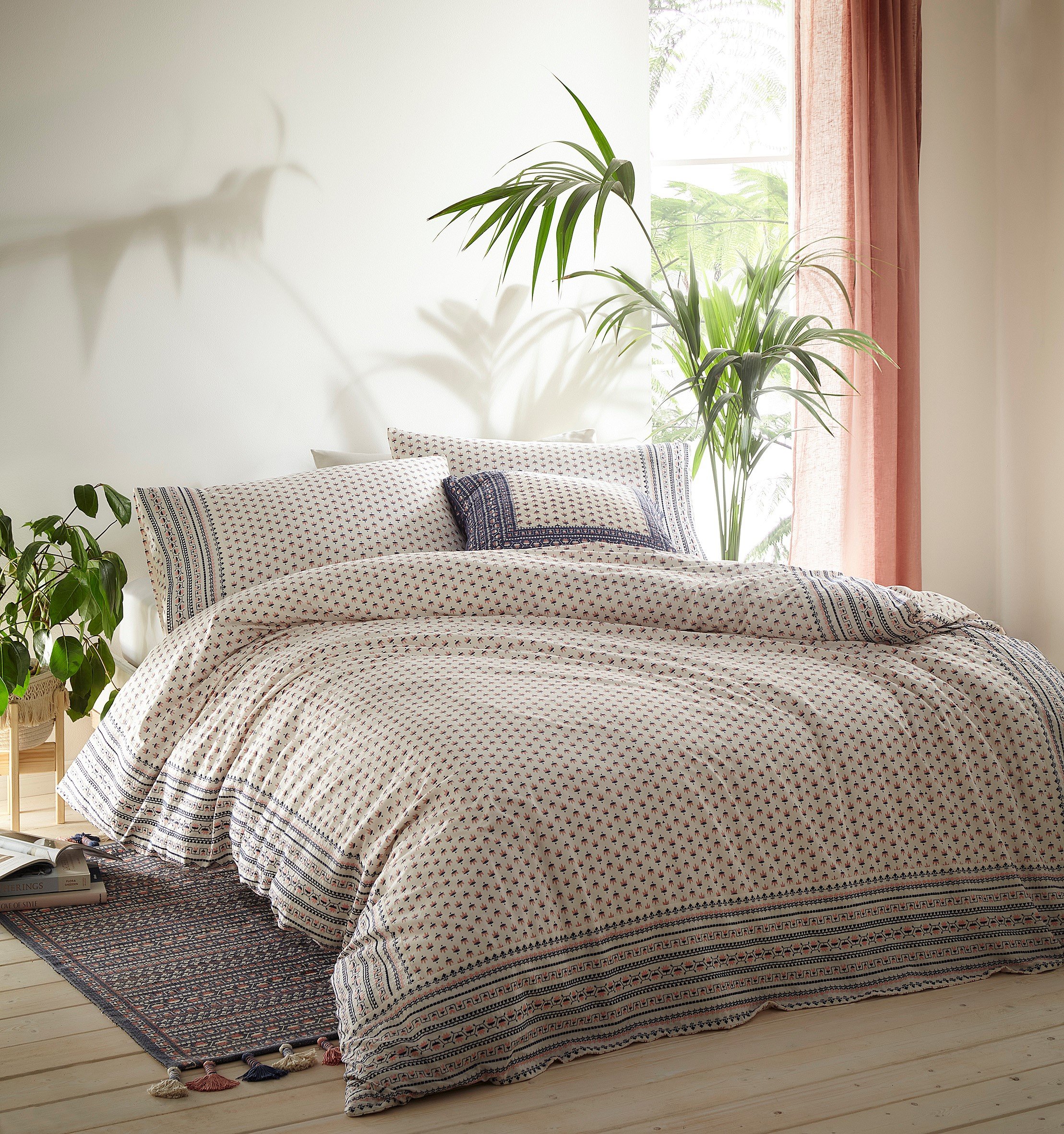
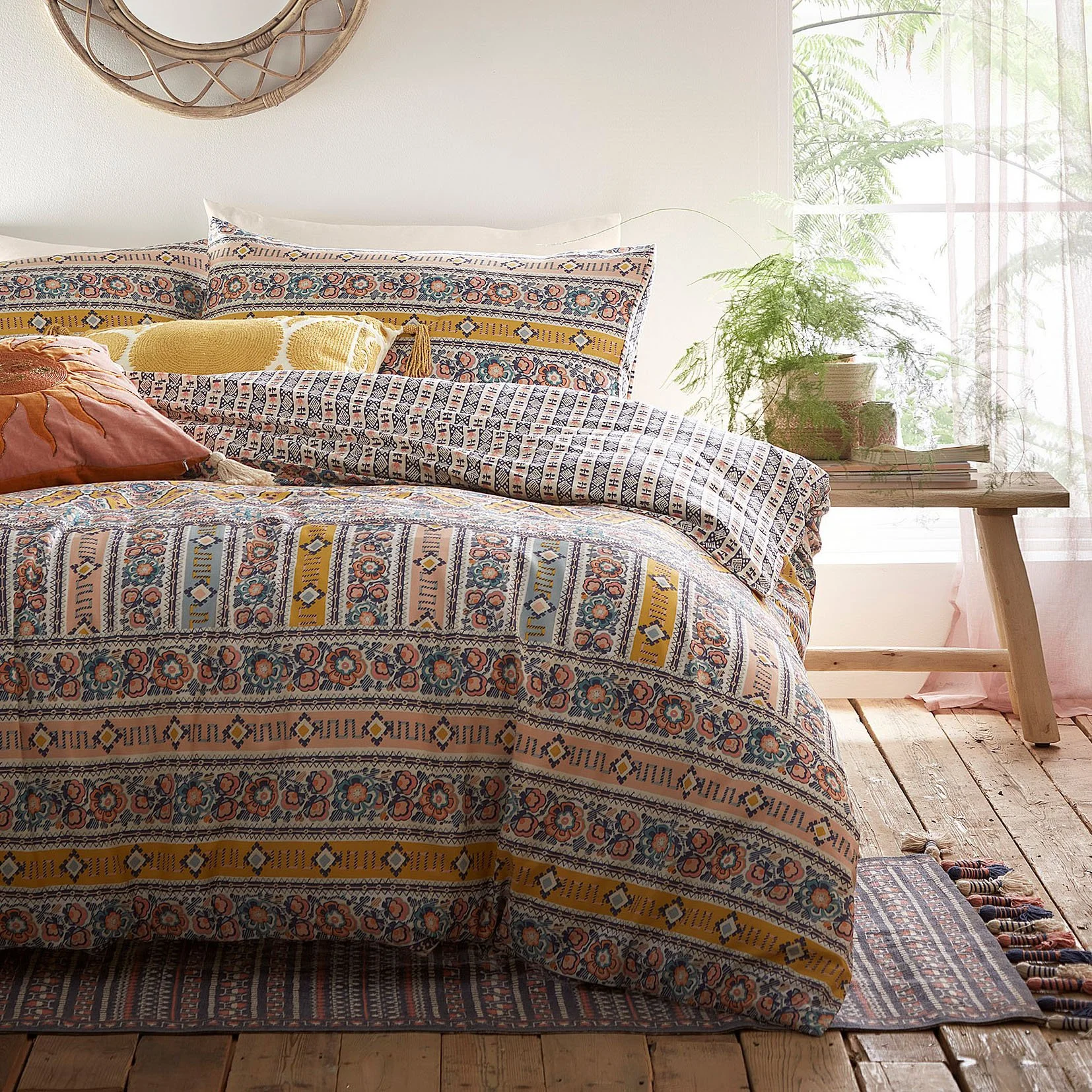
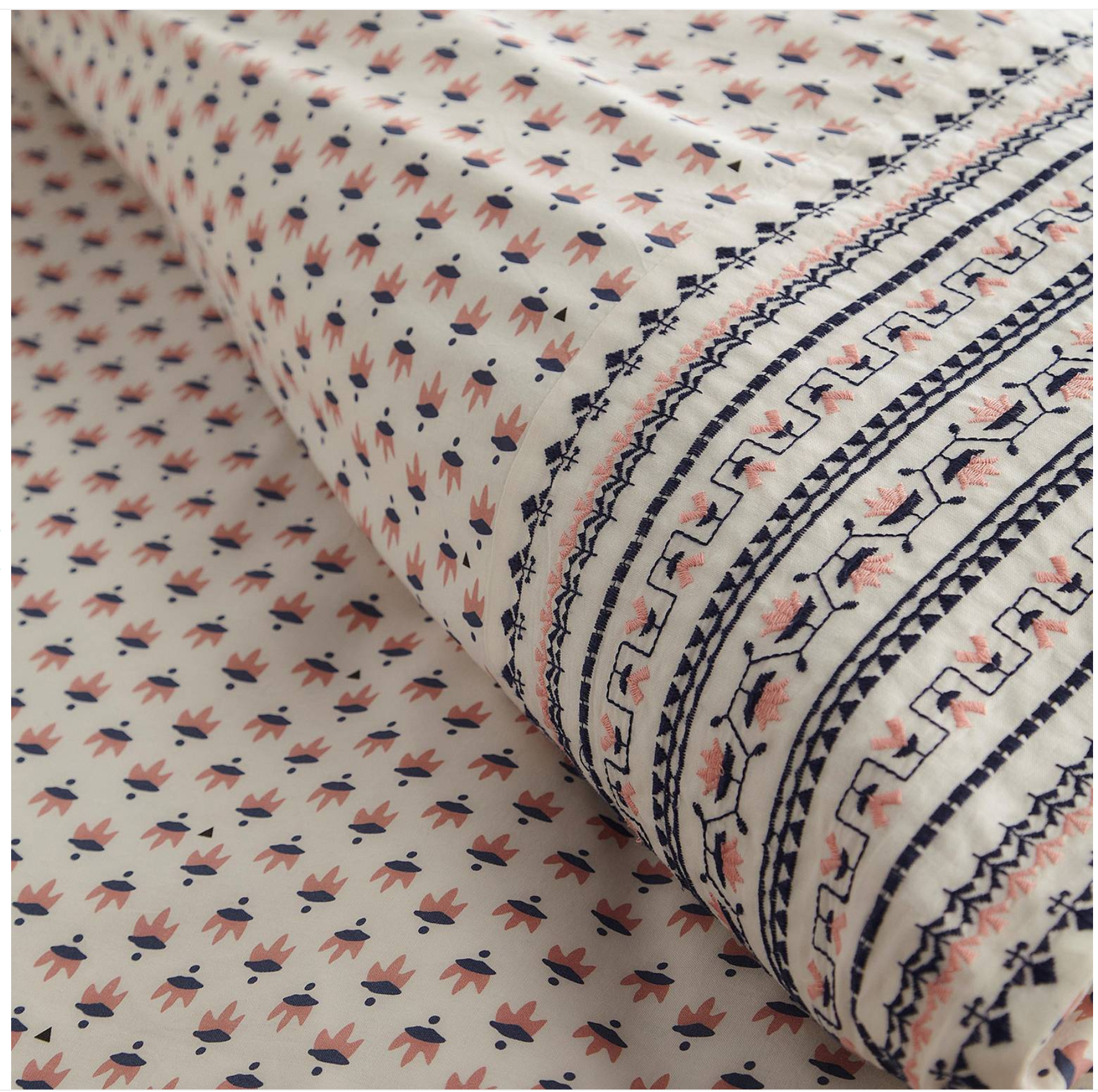
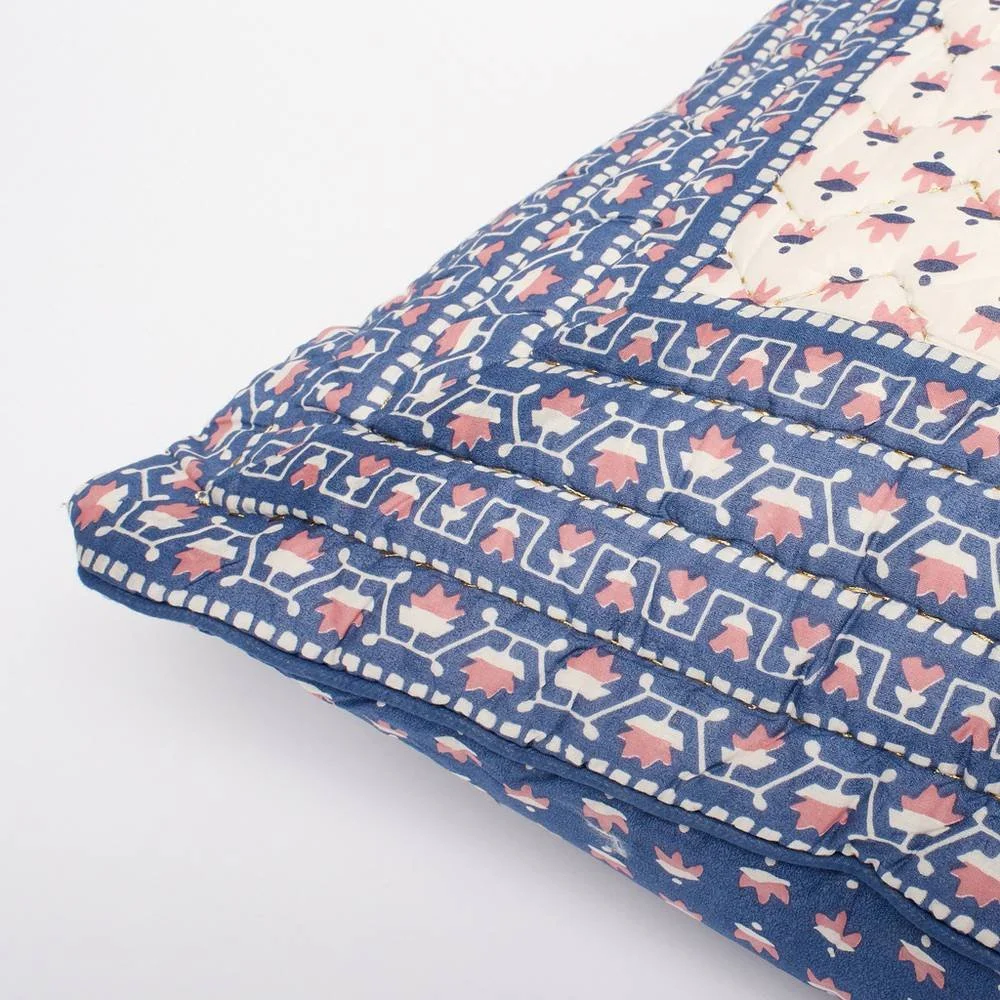
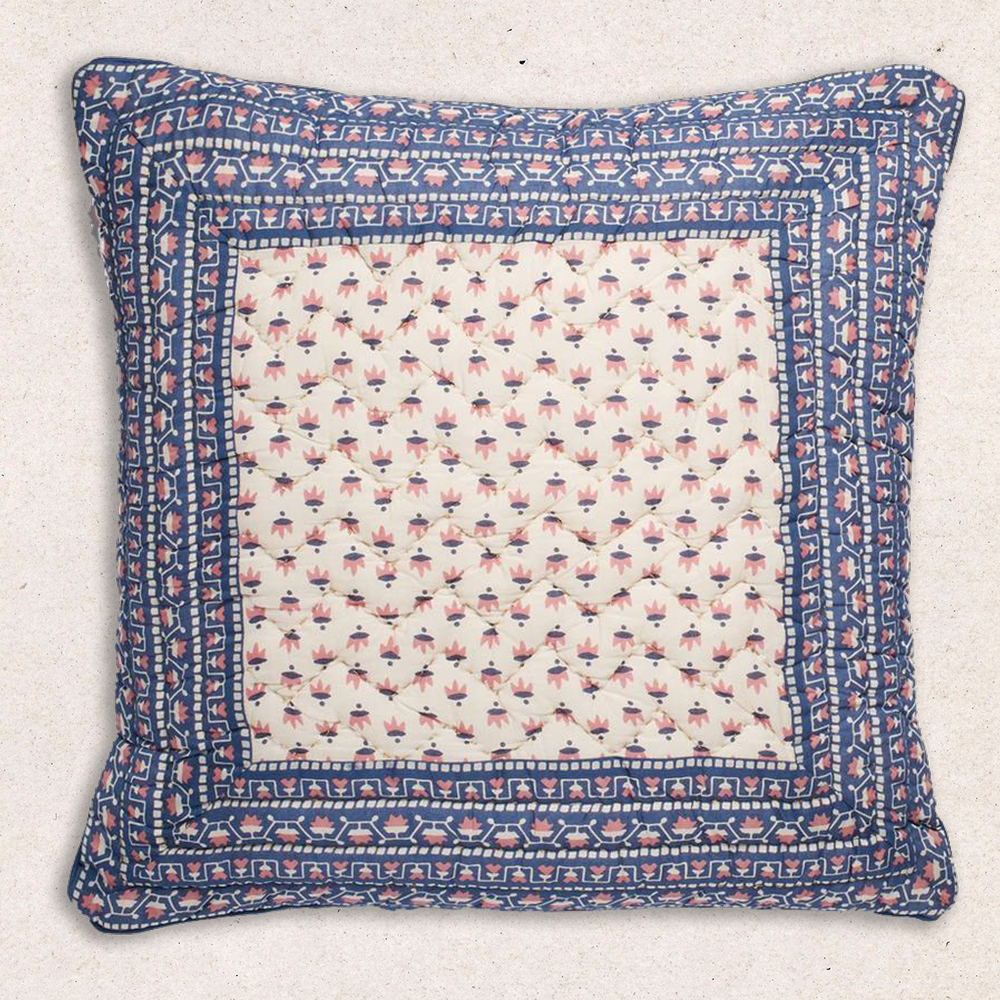
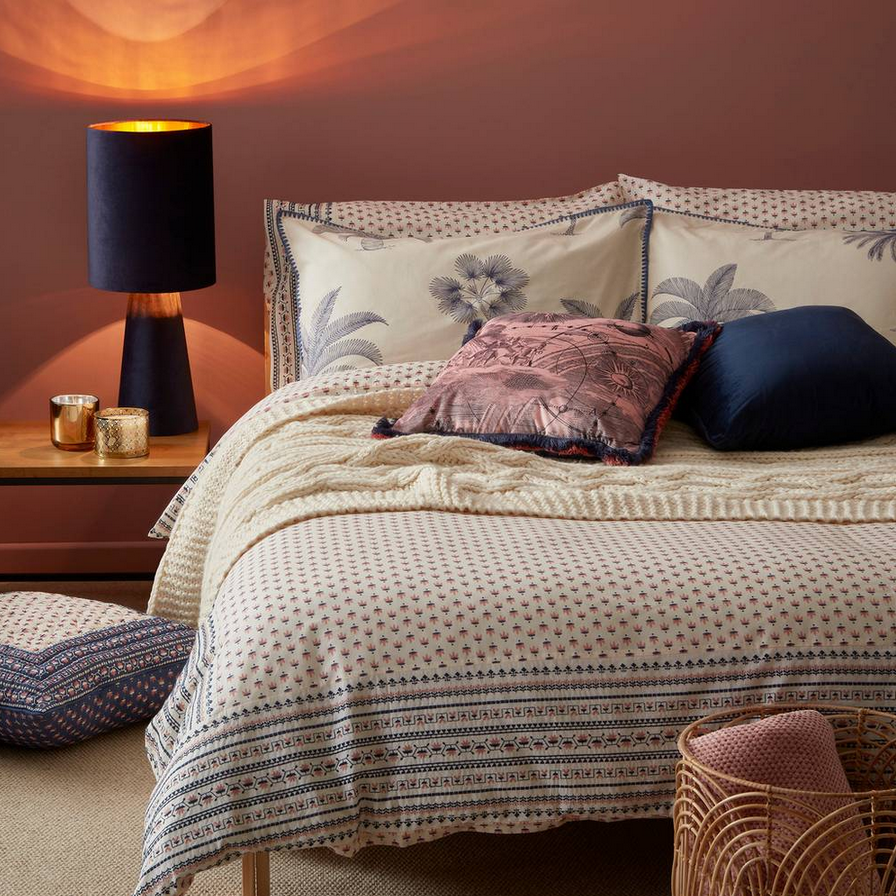
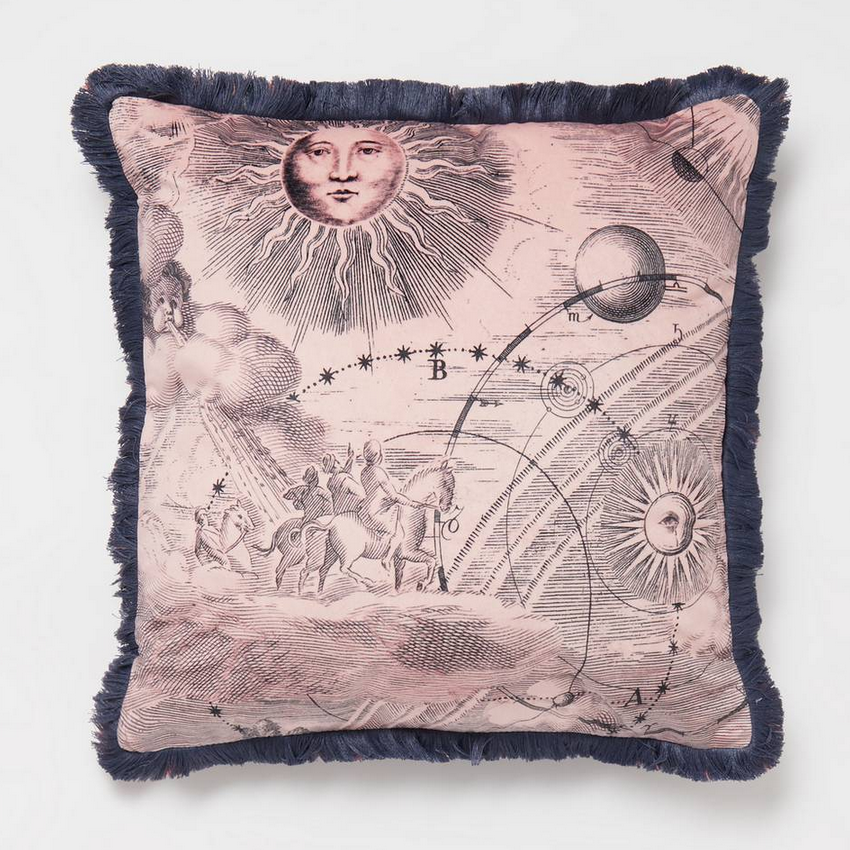
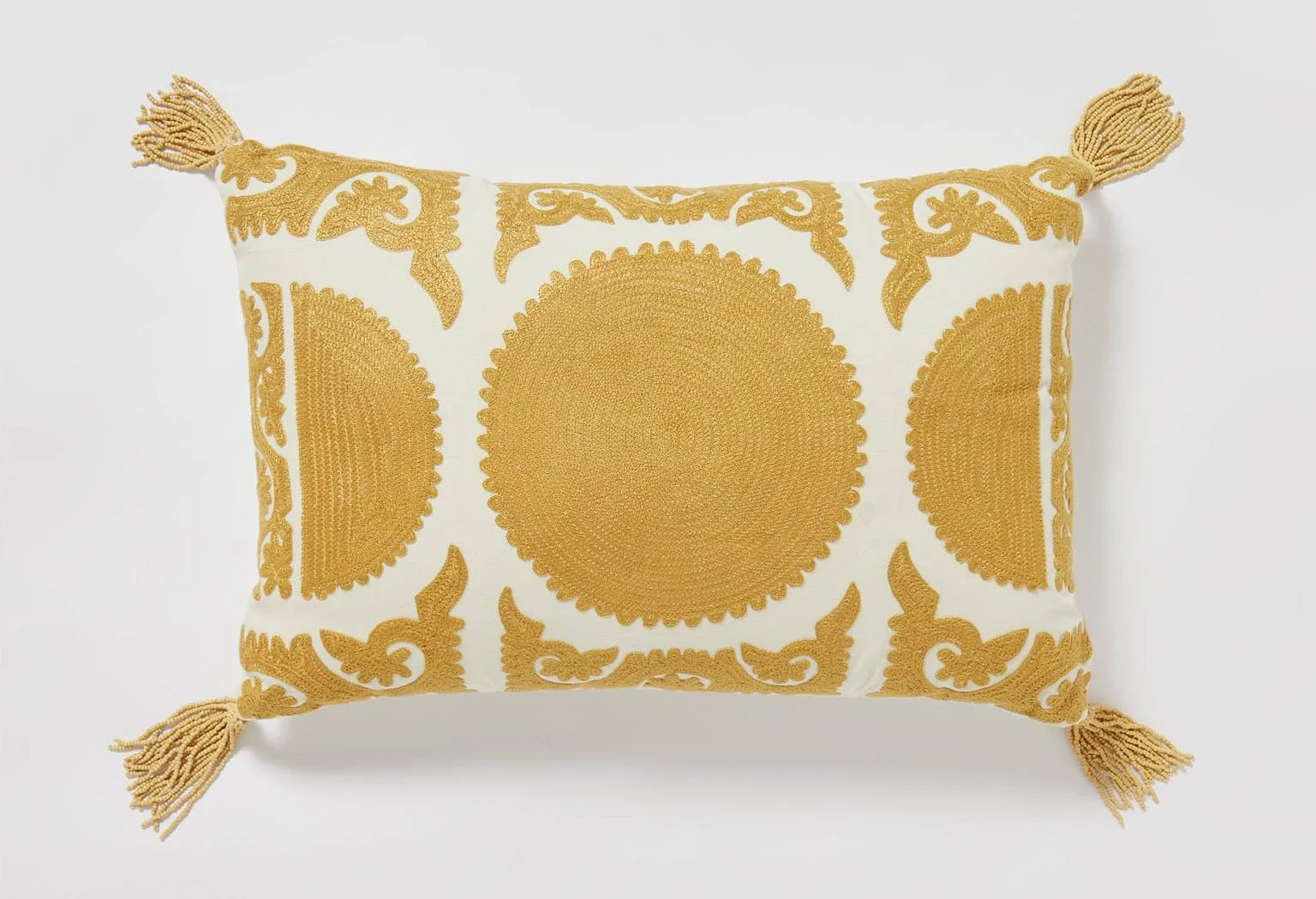
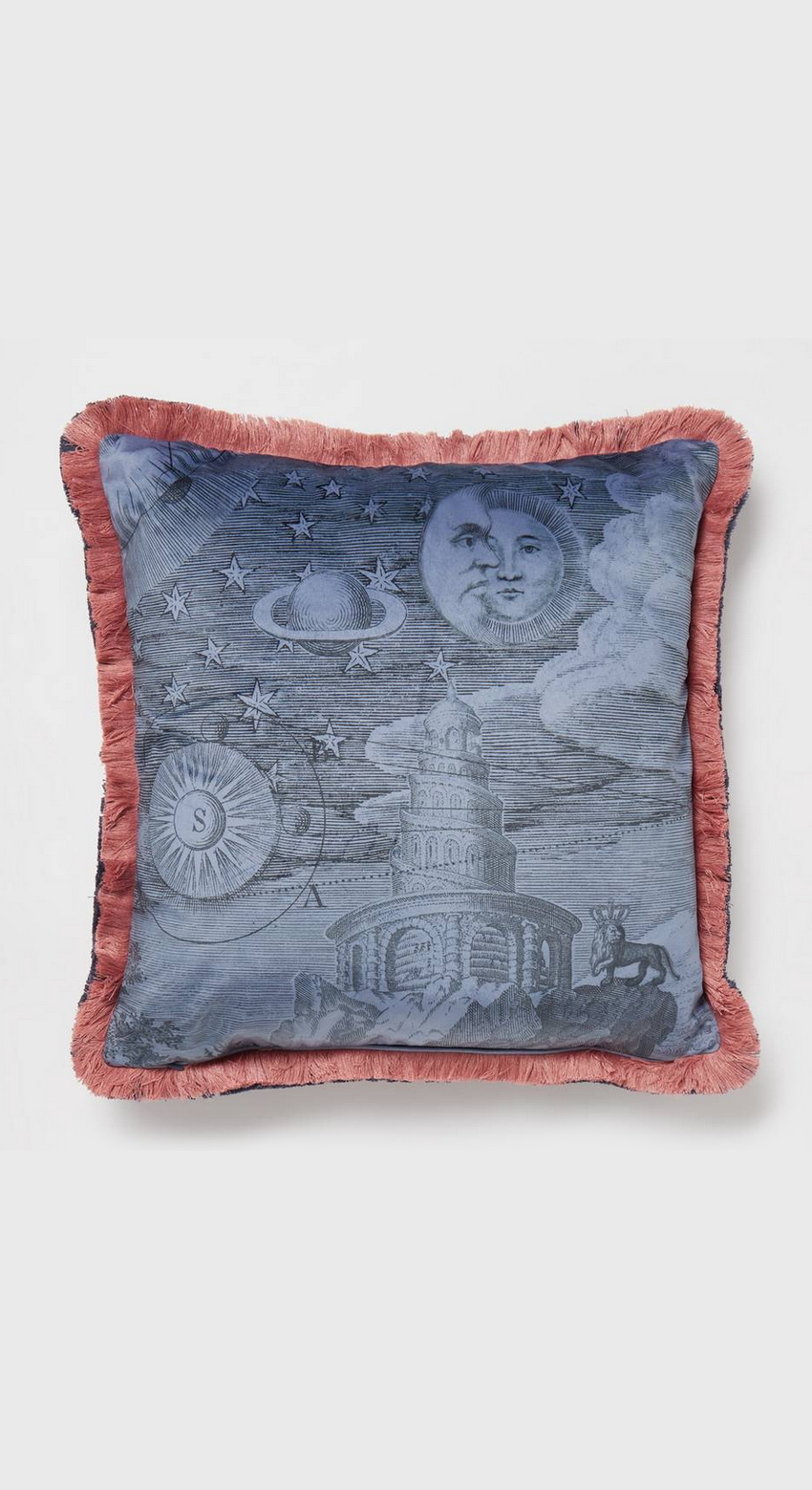
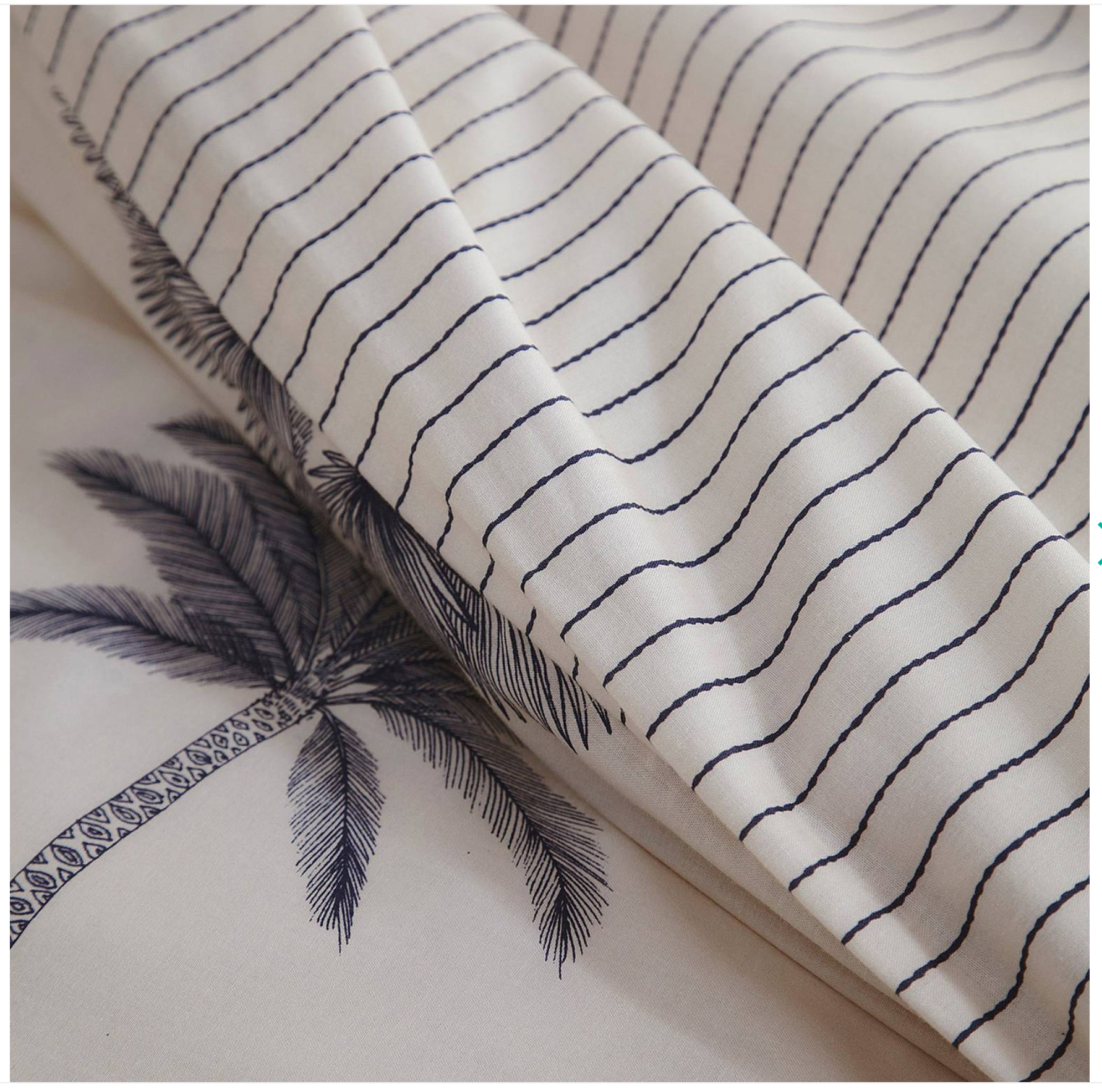
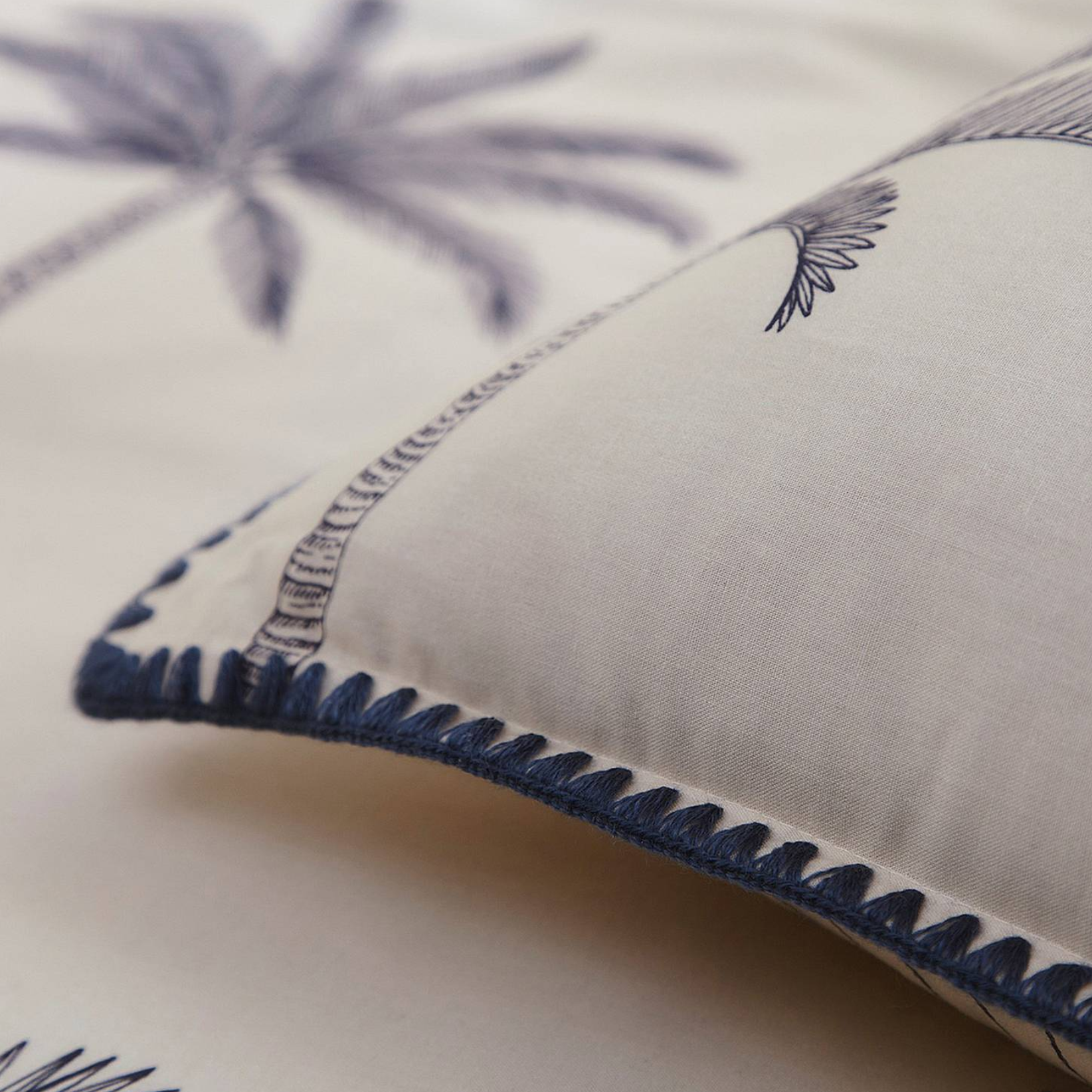
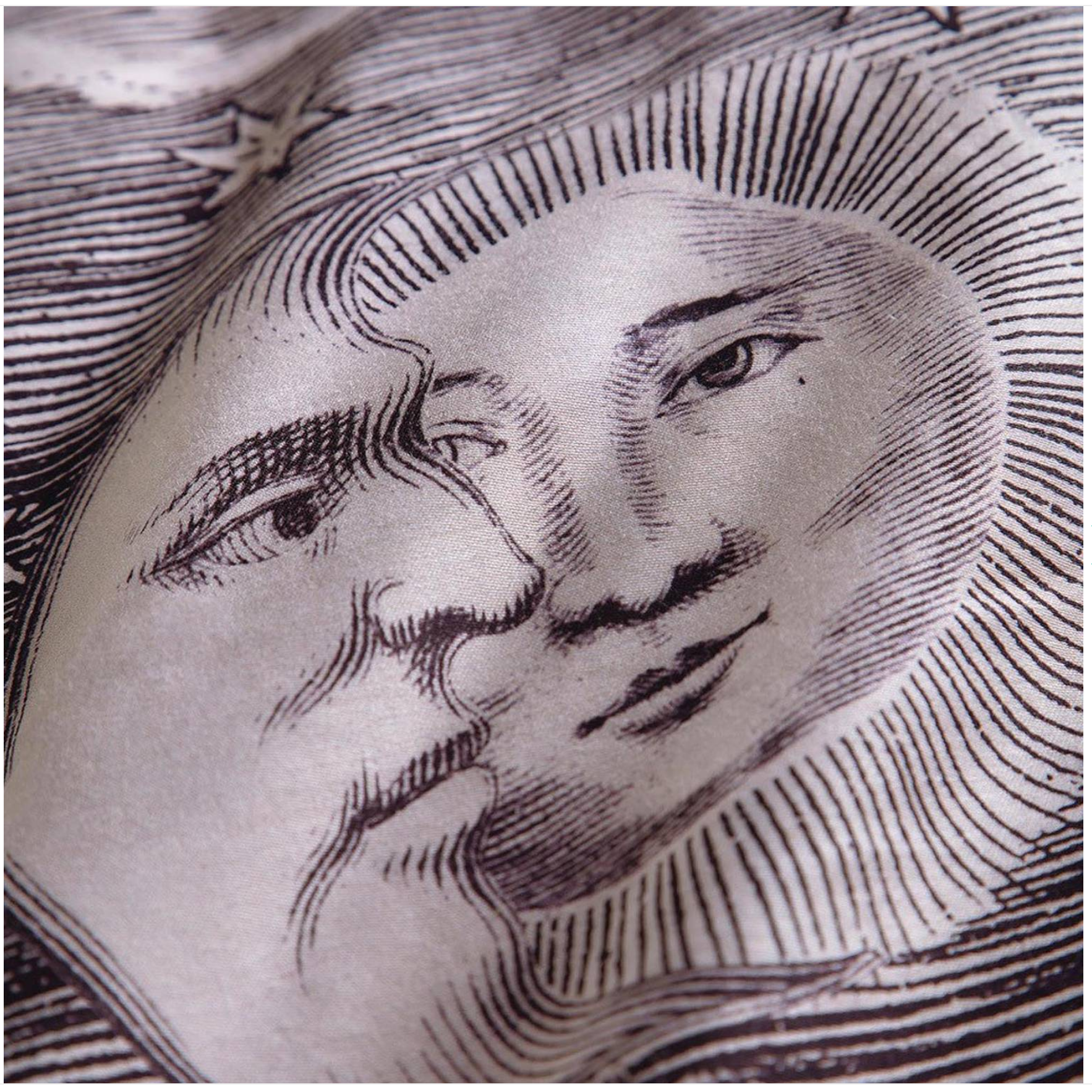
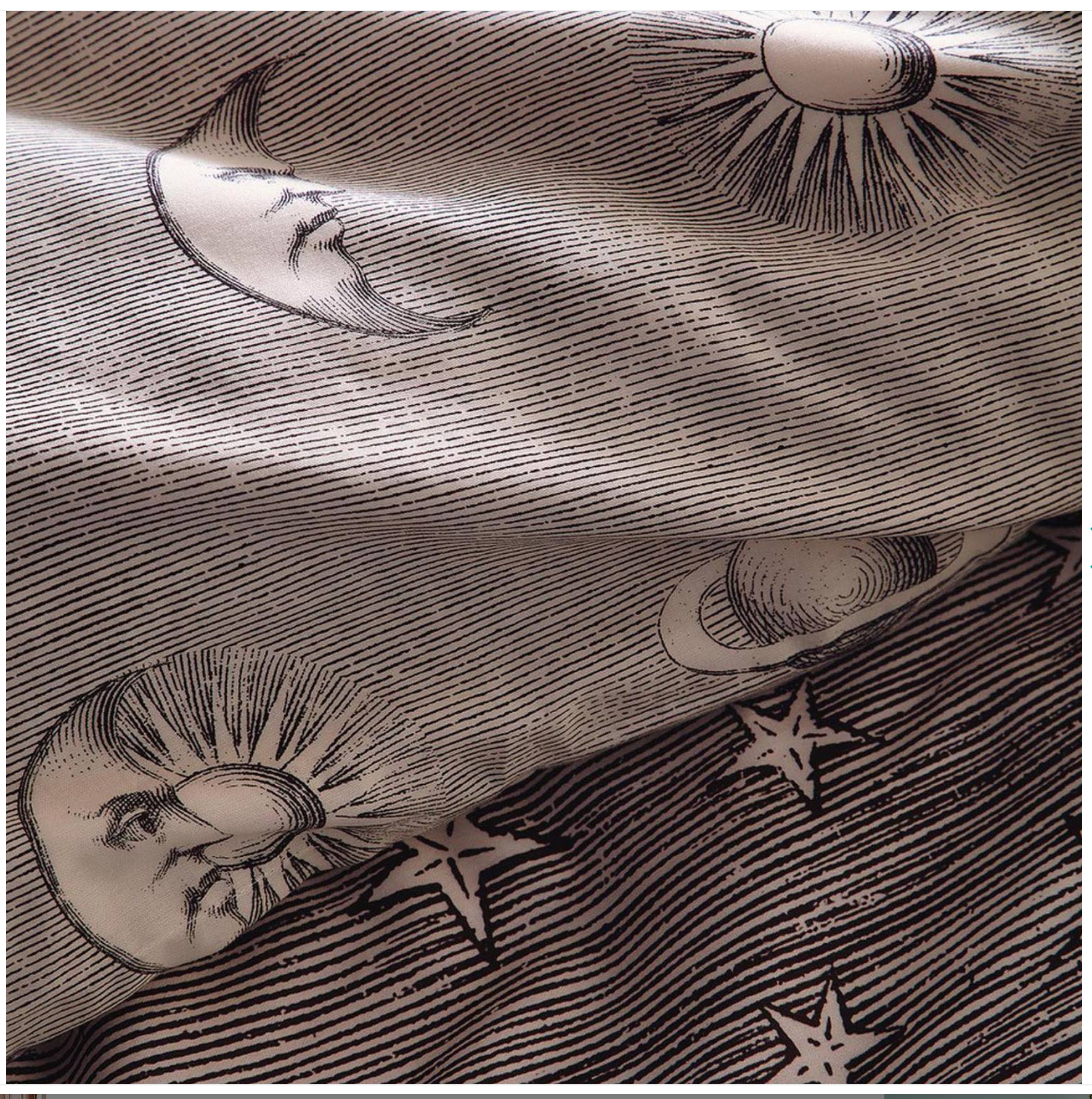
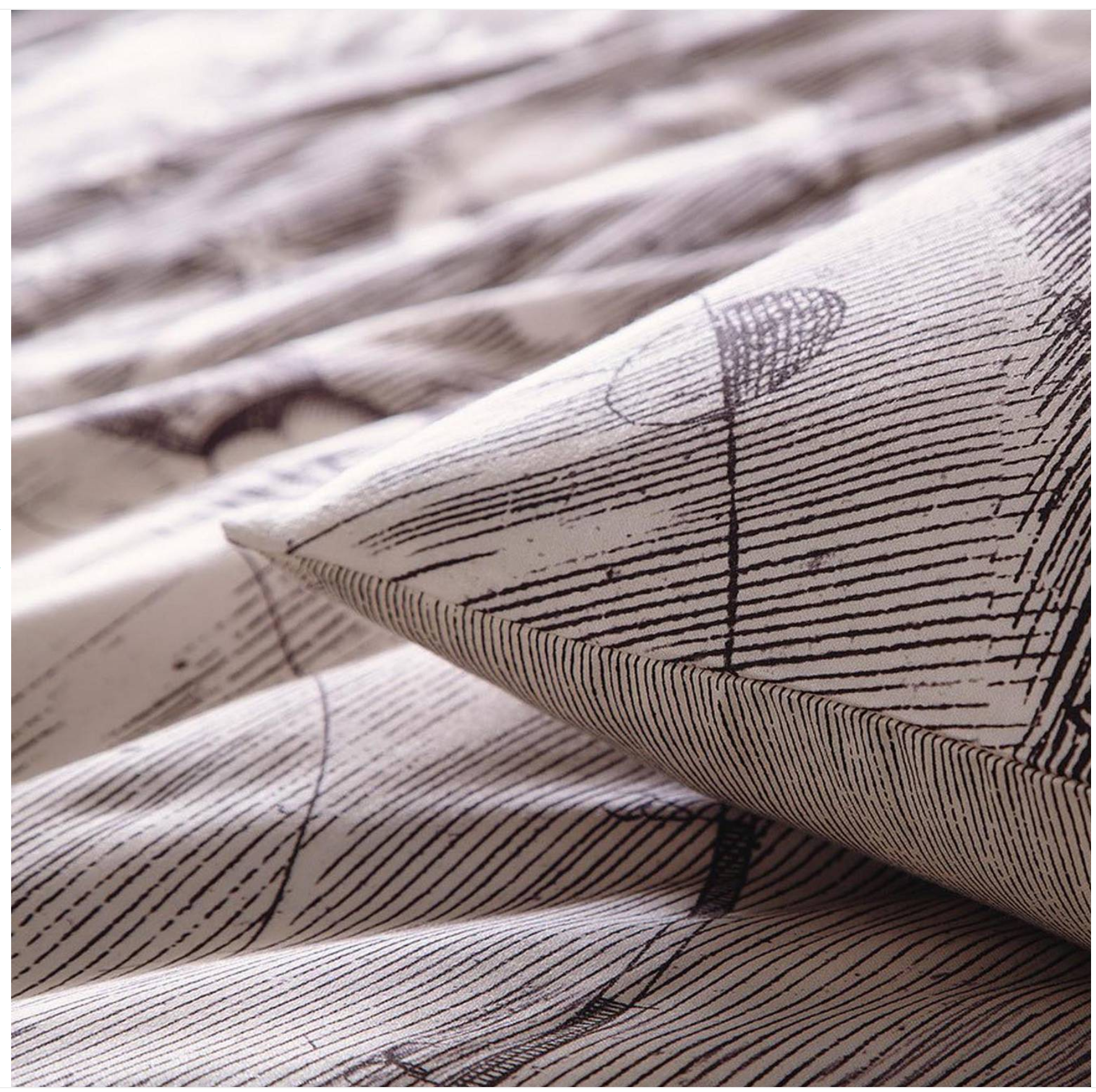
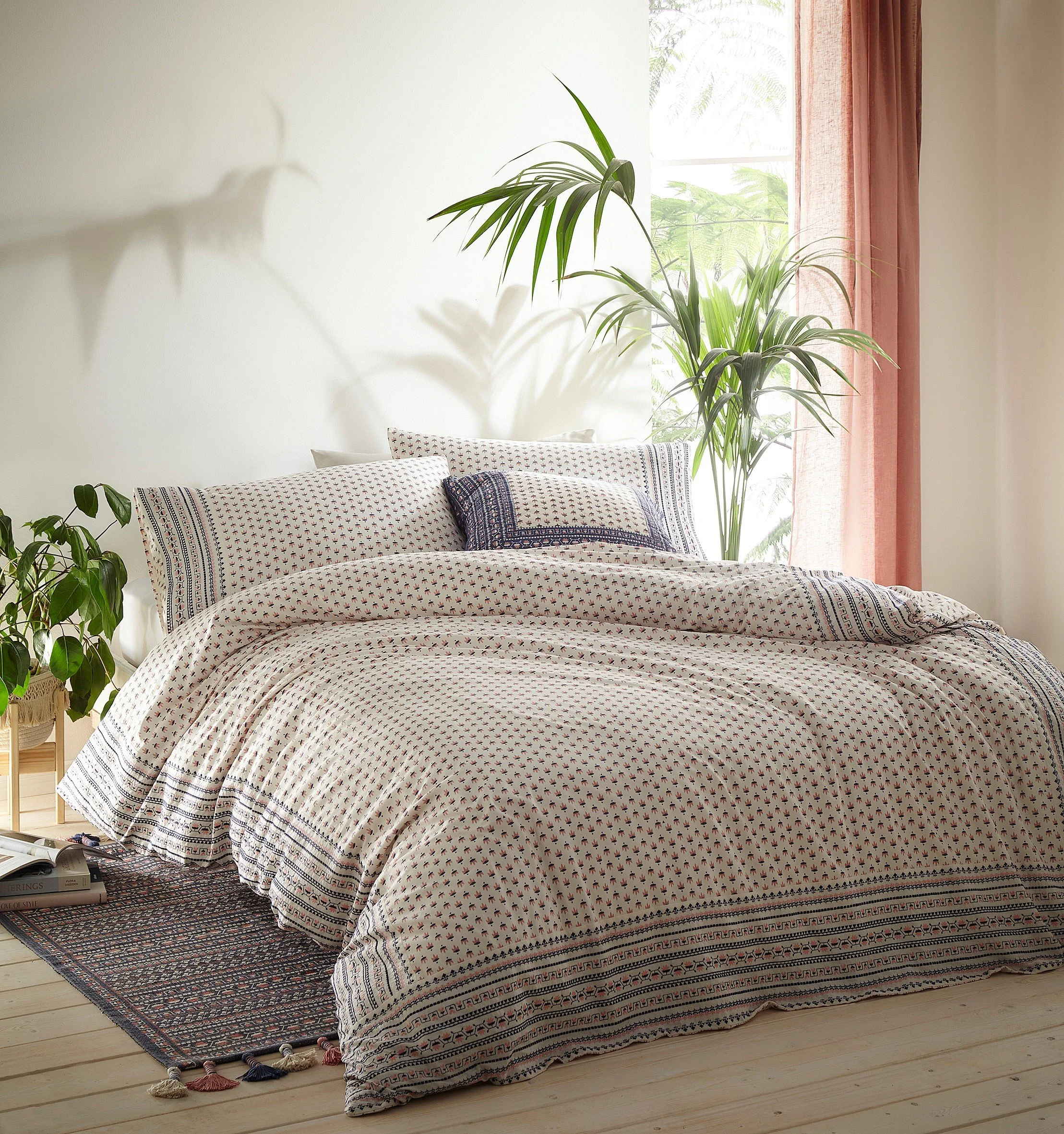
Homeware range — bedlinen, embroidery, soft furnishings, rugs
There was a gap in the range. Space for something with a real identity, not just a new colourway dropped onto an existing shape. Curiosities came out of that.
The concept was simple and a bit stubborn: objects built to last, bought once and kept. Decoration as a quiet pleasure. Things that fit into a life rather than demanding you reorganise it around them.
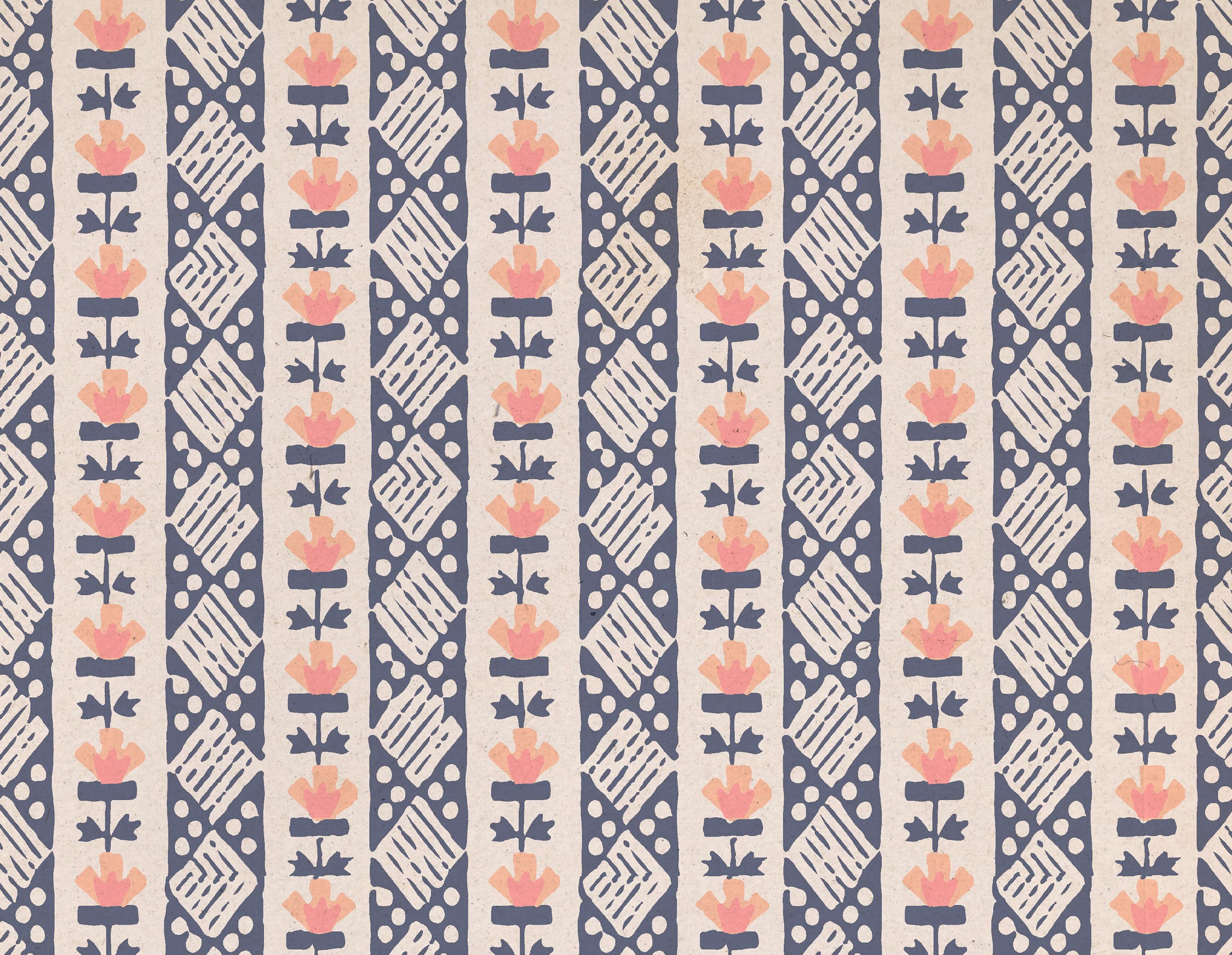
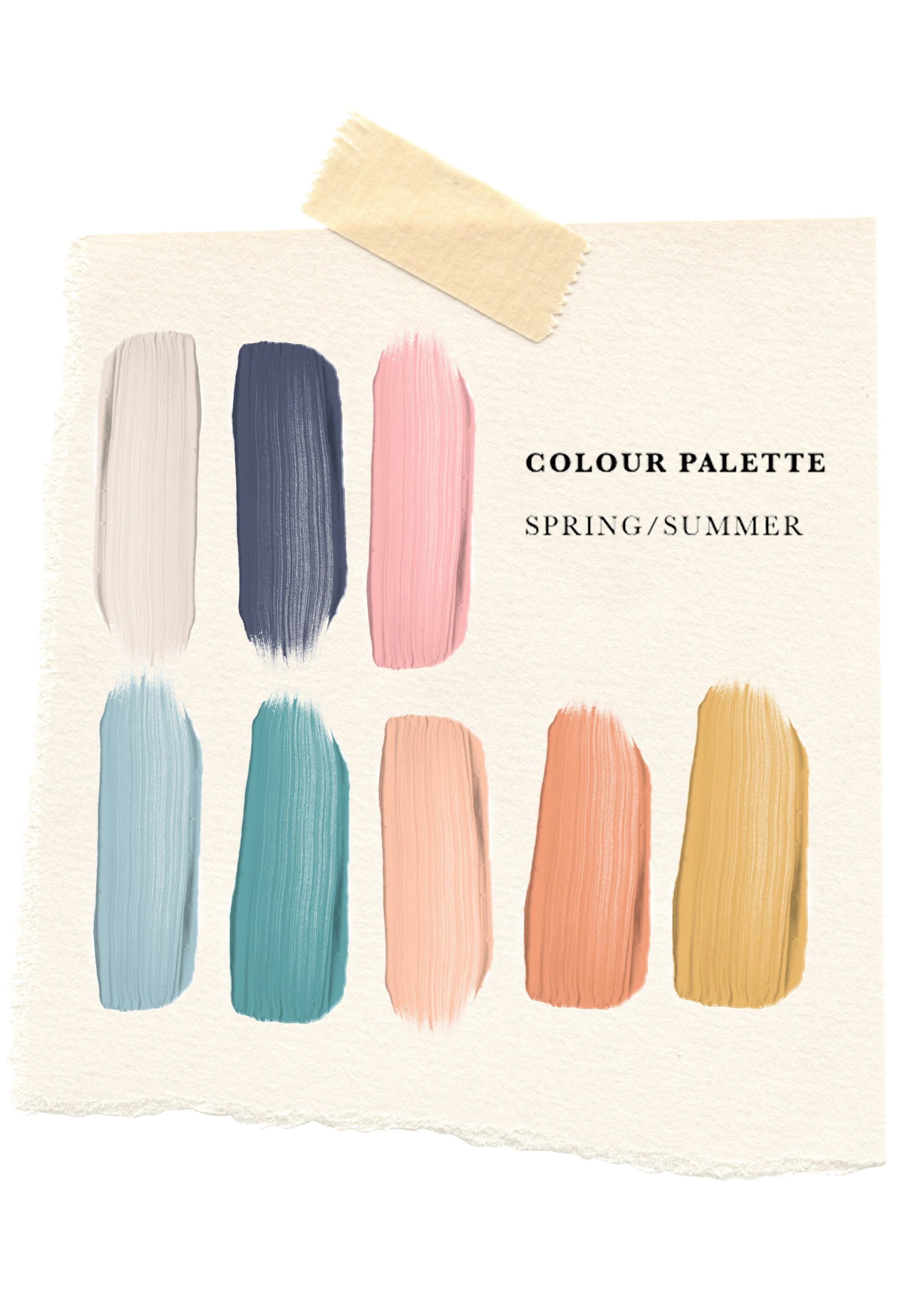
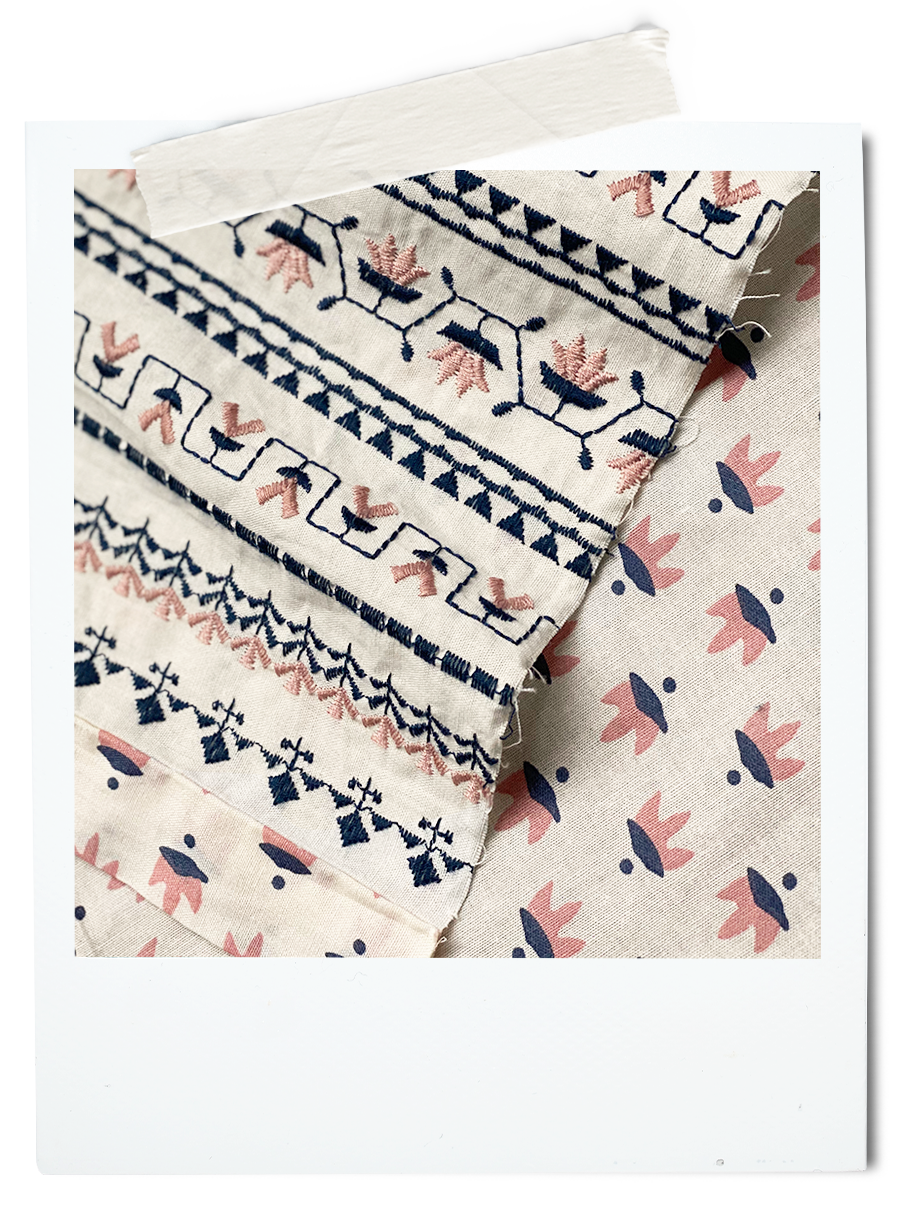
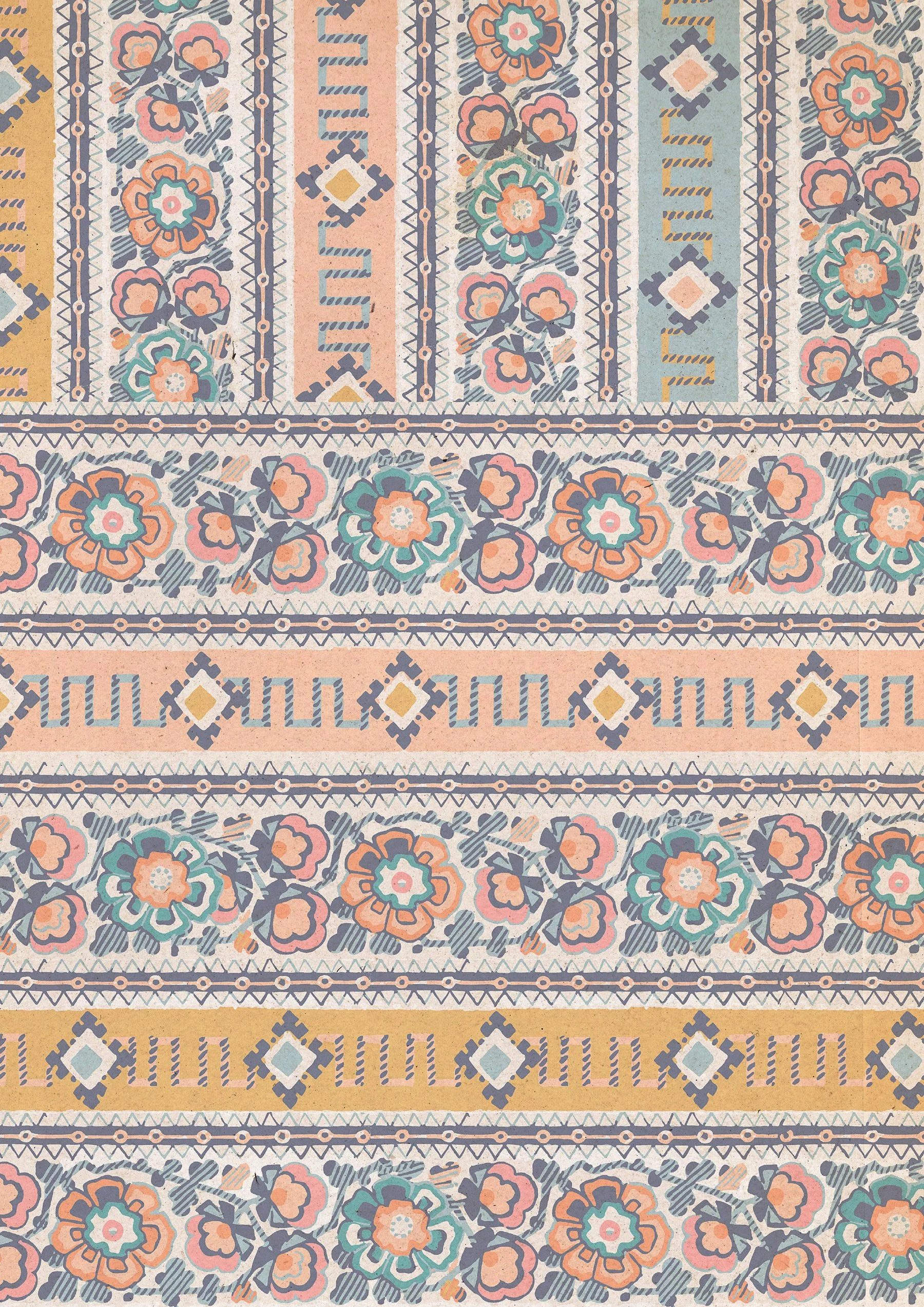
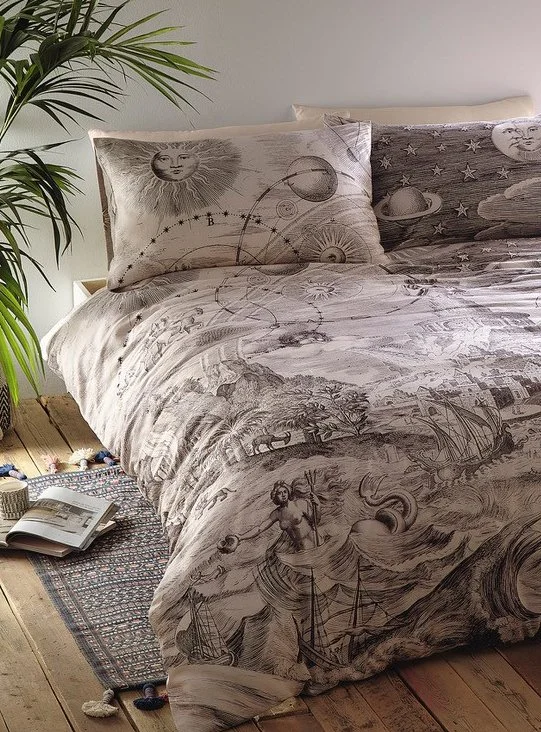
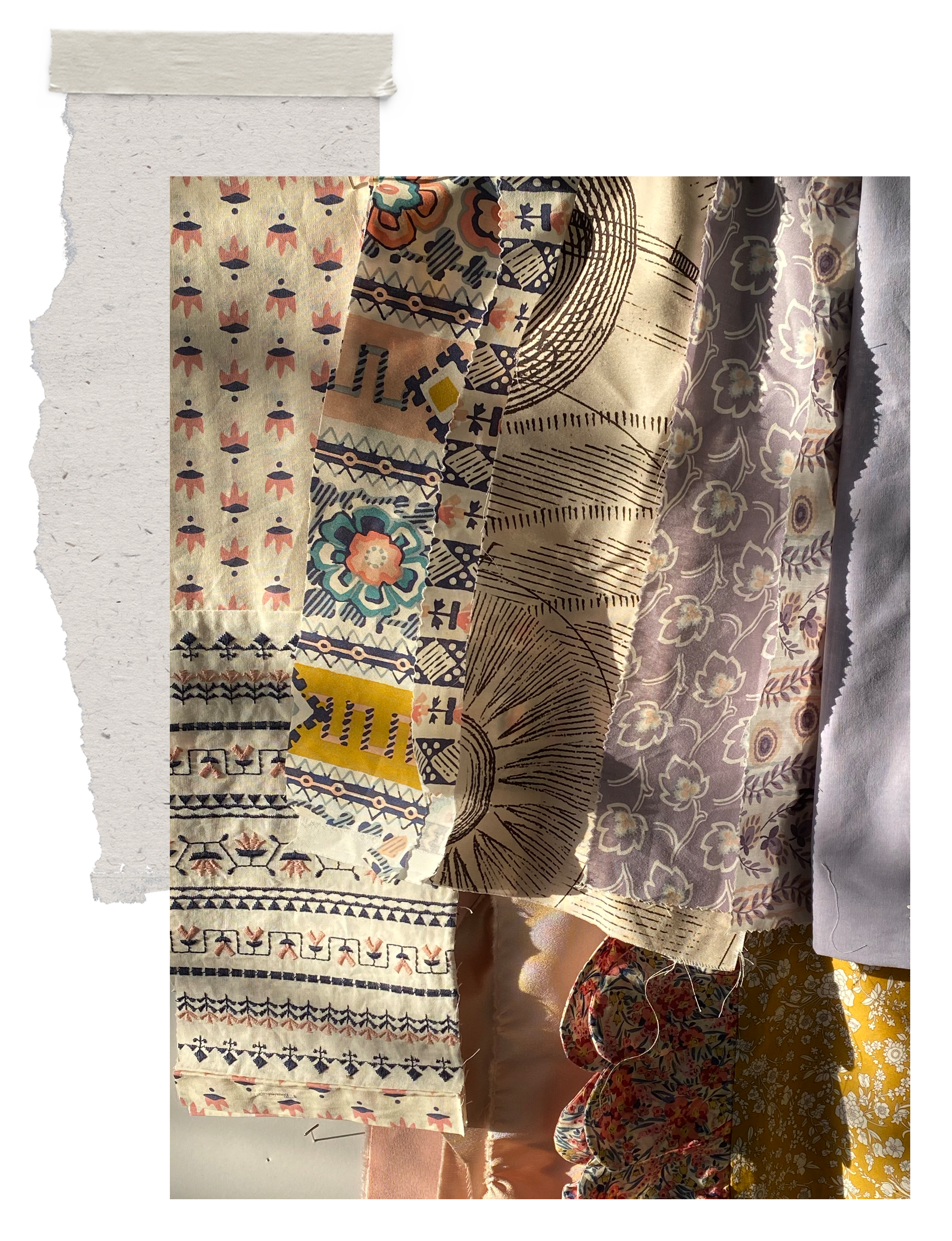
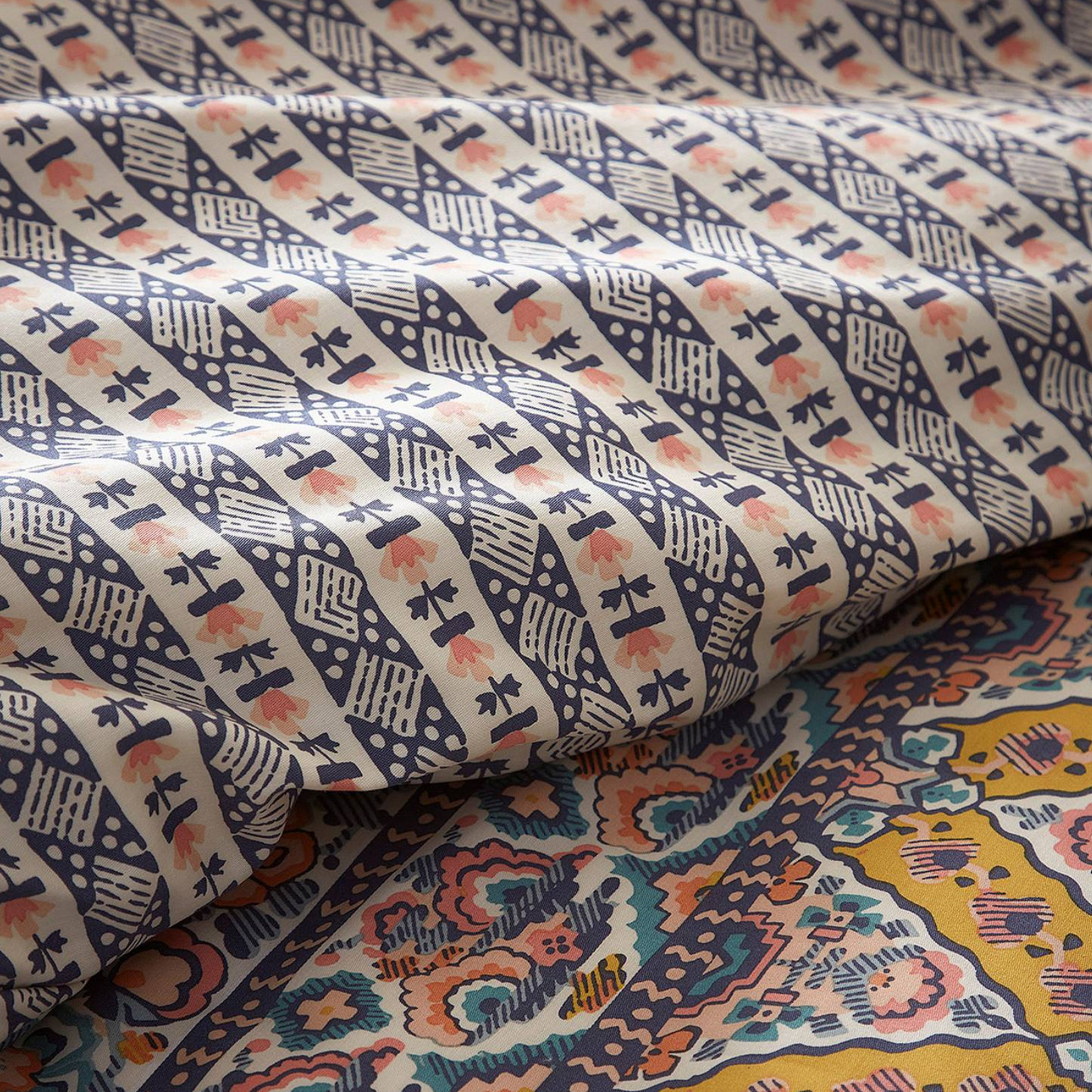
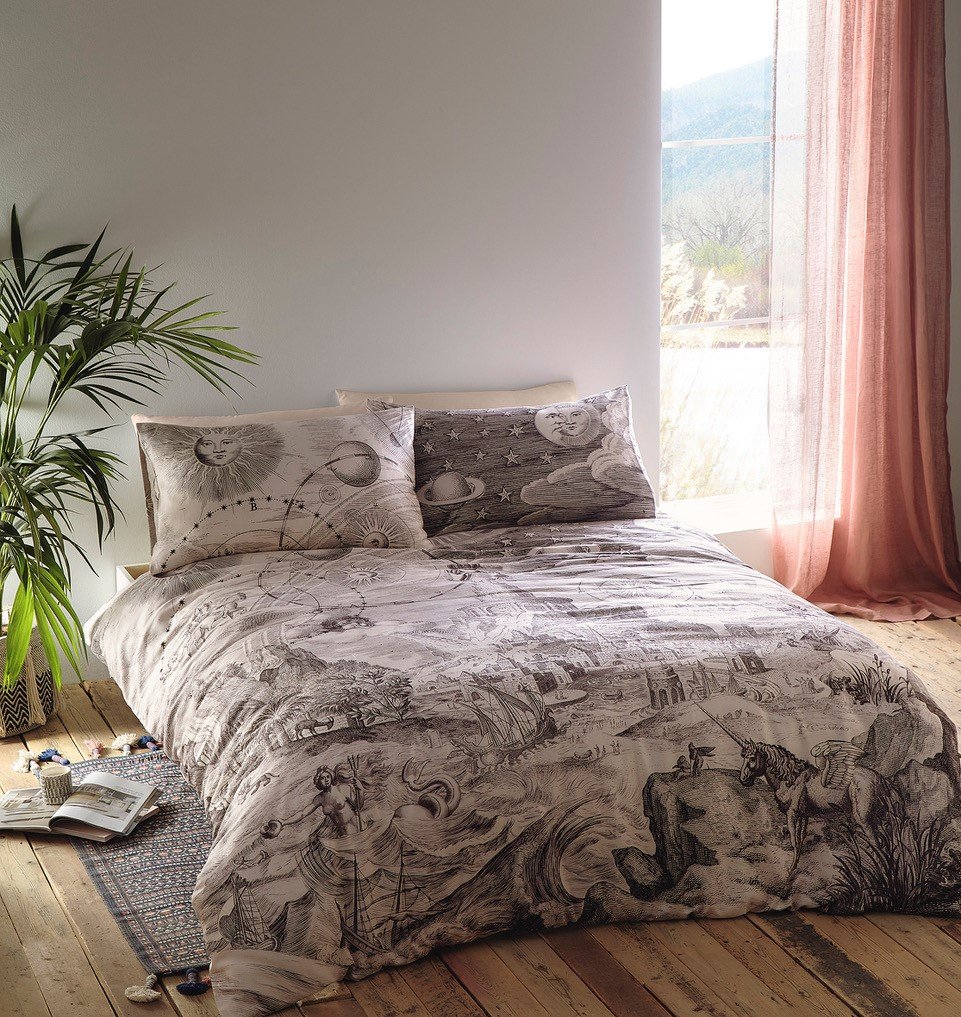
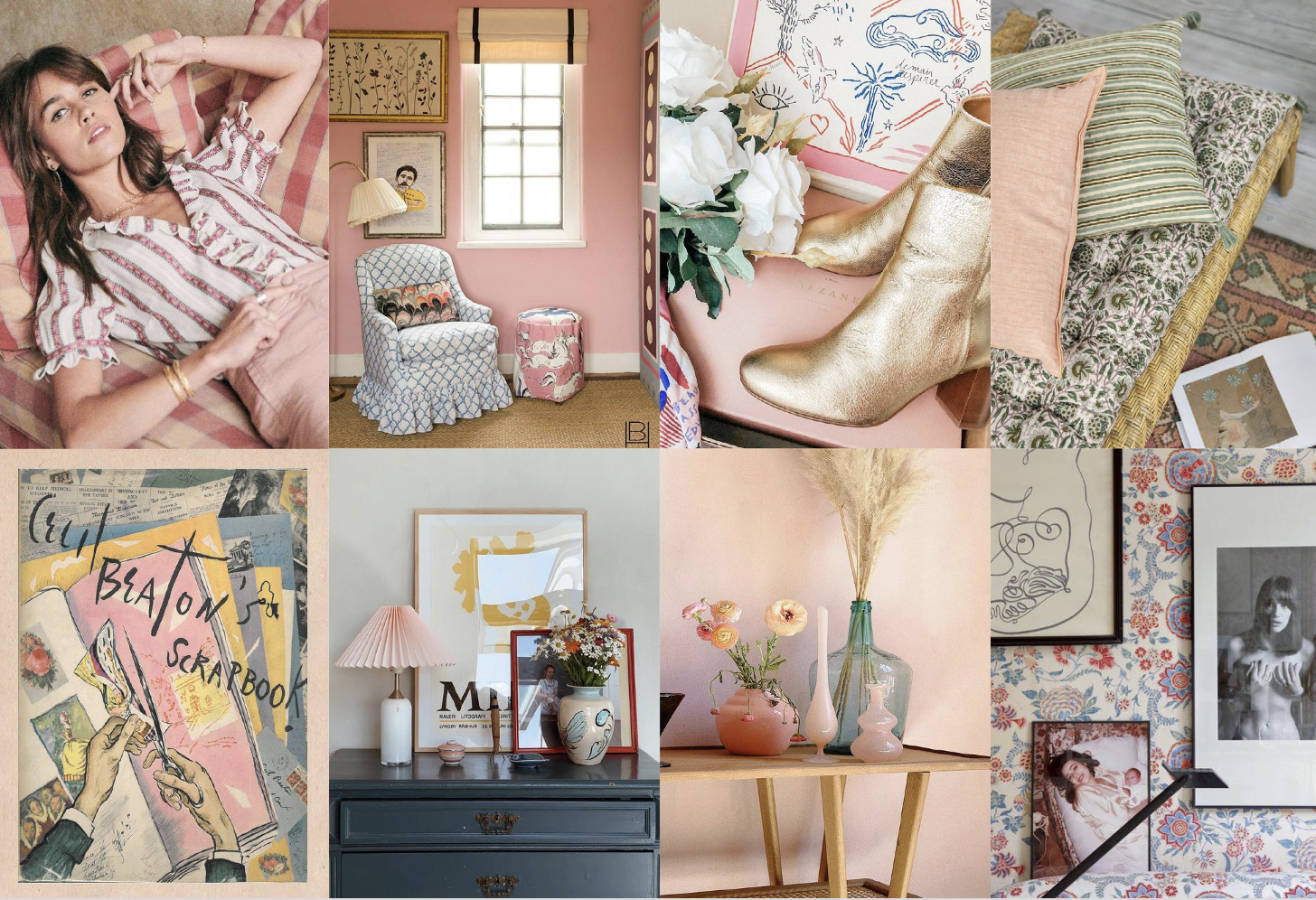
Colour came from faded textiles and half-remembered memories. Barely-there tones, the odd pop of brightness, wine-stain reds for depth, and a washed-out green that was hard to categorise but looked right. Patterns followed the same logic — reductive printing, where taking a screen away reveals something more interesting than adding one would. Retro checks and stripes sitting alongside scenic illustrative prints, strange and romantic in equal measure. Jean Cocteau and Cecil Beaton sketchbooks were a reference: that looseness, a life drawn quickly rather than carefully finished.
Each product was given a person's name. Small thing, but it mattered. The range was always meant to feel like it belonged to someone.
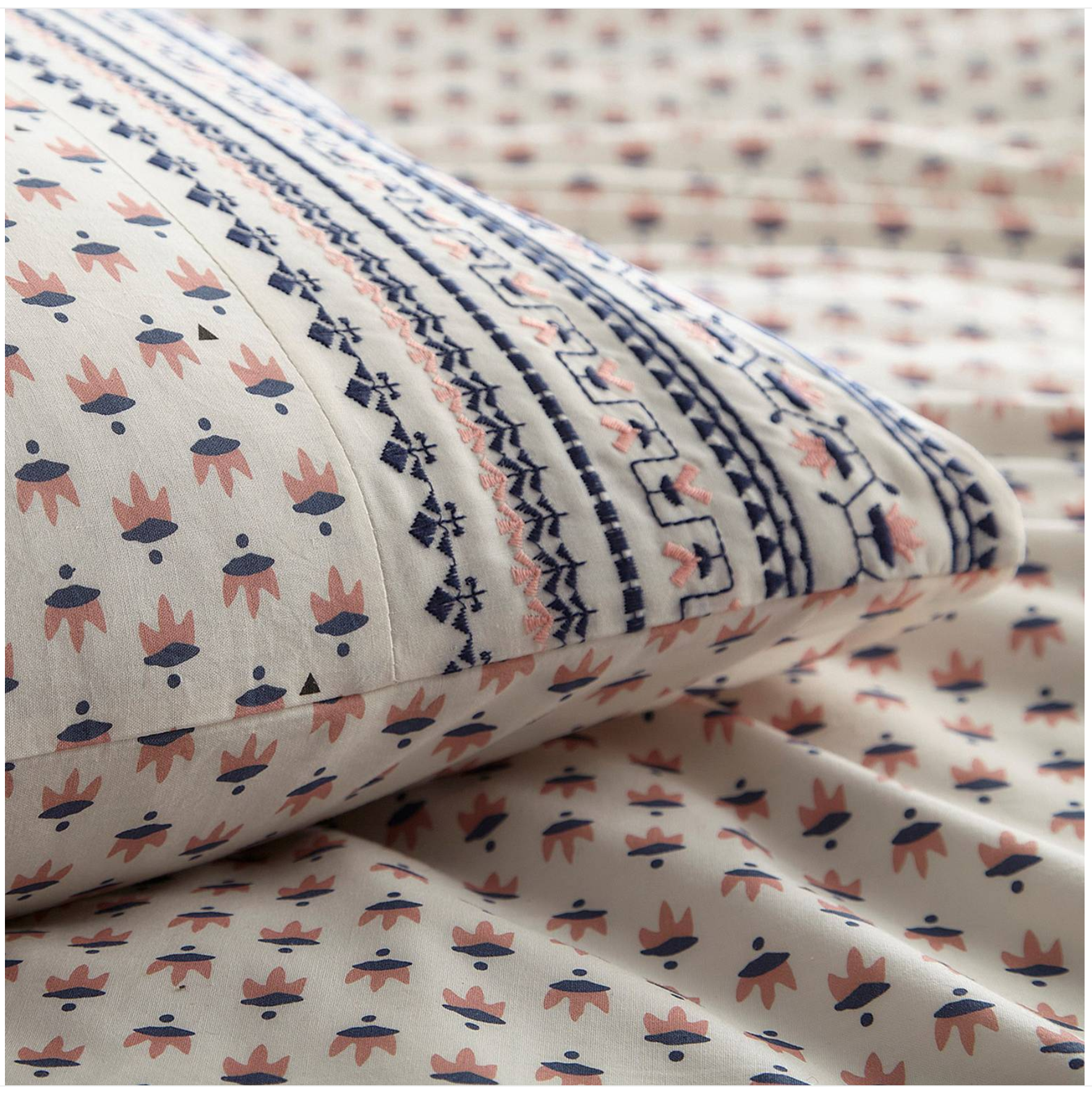
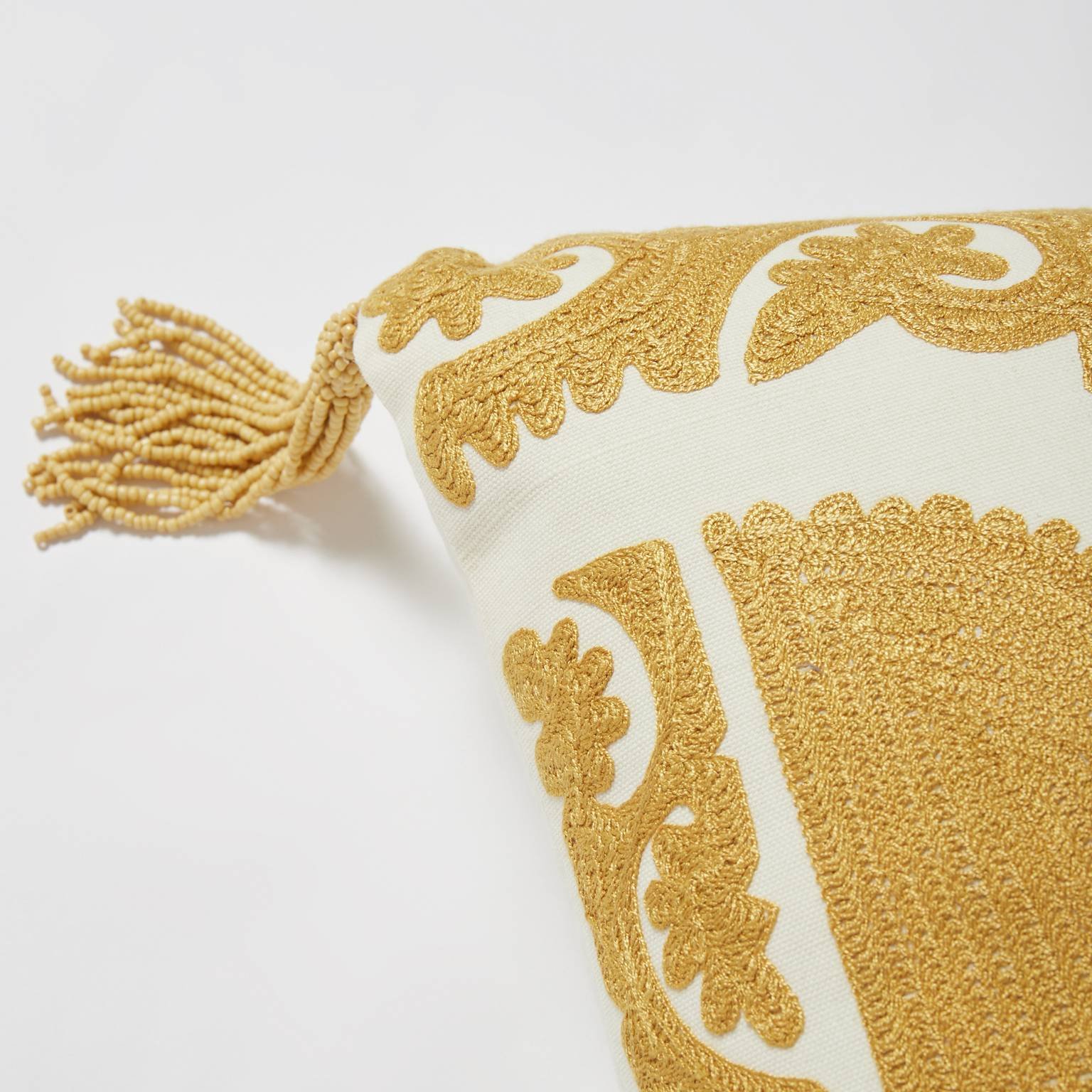
The embroidered pieces were made with artisans in India, working through the construction decisions together so the making genuinely shaped the design.
Packaging was rebuilt from scratch. No plastic. Reusable fabric bags, fabric-patched labels, and copy that carried the range's actual story rather than a retail pitch.
The range launched with a £2m retail buy.